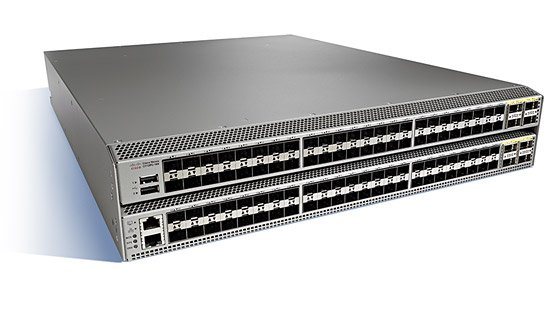
- The Mess: Cisco Secure Email Gateway has a critical SQL injection in its email parser. Attackers are already exploiting it to execute commands as root.
- The Damage: A remote attacker does not need an account, a web exploit, or user interaction — a malicious email can be enough to compromise the appliance.
- The Fix: Patch immediately. There is no workaround.
This is the kind of bug that turns an email security appliance into the thing that needs protecting.
CVE-2026-76461 affects Cisco AsyncOS Software for Secure Email Gateway. Cisco rates it CVSS 9.8 Critical and says the vulnerability is already being exploited in the wild. The flaw sits in the appliance’s email-parsing logic and can be triggered remotely without authentication.
The vulnerable product exists specifically to inspect hostile email traffic.
That makes the attack path particularly nasty.
The attack path
The vulnerability is a CWE-89 SQL injection caused by insufficient validation in the email parsing logic.
An attacker sends a specially crafted email containing malicious SQL statements through a vulnerable gateway.
The vulnerable parser processes the message.
The SQL injection executes.
The attacker reaches command execution with root privileges on the underlying operating system.
The practical chain is brutally simple:
Internet
   ↓
Malicious email
   ↓
Cisco Secure Email Gateway
   ↓
Email parser
   ↓
SQL injection
   ↓
OS command execution
   ↓
root
There is no authentication step in that chain.
There is no browser exploit.
There is no requirement for the victim to click anything.
The gateway itself processes the malicious input.
Cisco says attackers are already using it
This is not a theoretical CVSS 9.8.
Cisco PSIRT says it became aware of active exploitation in September 2026. The vulnerability was discovered during the resolution of a Cisco TAC support case and publicly disclosed on September 14.
Cisco also warns that successful exploitation can give attackers root-level command execution and that attackers with this level of access may remove or hide evidence of compromise.
That changes the response.
If an appliance was exposed while vulnerable, simply installing the patch is not enough to prove that the device was never compromised.
Check the logs
Cisco provides a specific indicator to look for in the appliance’s mail_logs.
One example is:
grep -i "COPY.*TO PROGRAM" [IronPort Text Mail Logs Log name - Default: mail_logs]
Cisco says the presence of such an entry may indicate malicious activity. Administrators should also inspect network and firewall logs for unexpected uploads from the appliance or downloads from suspicious external addresses.
And there is an important catch.
Root access means an attacker can potentially manipulate evidence on the appliance itself.
So local logs should not be treated as the only source of truth.
External logging becomes extremely valuable here.
What is affected?
Cisco says the vulnerability affects Cisco Secure Email Gateway, both physical and virtual, regardless of device configuration.
The following releases are affected and have corresponding fixes:
- 15.5 and earlier: 15.5.5-014
- 16.0: 16.0.4-302
- 16.5: 16.5.0-780
Cisco recommends migrating to 16.5.0-780 where possible. Cisco Secure Email Cloud devices have already been upgraded to 16.5.0-780.
Cisco explicitly says that Secure Email and Web Manager and Secure Web Appliance are not affected by this particular vulnerability.
There is no workaround
This part deserves attention.
Cisco lists no workaround for CVE-2026-76461.
The vendor’s recommendation is to upgrade to a fixed AsyncOS release.
For an exposed email gateway, waiting for a convenient maintenance window is a bad strategy when exploitation is already confirmed.
If patching cannot happen immediately, the defensive priority should be reducing unnecessary exposure, collecting external logs, monitoring outbound traffic and preparing incident-response procedures.
Cisco also recommends preventing Internet access to the appliance where possible and separating mail and management interfaces.
If you suspect compromise
Don’t immediately wipe the appliance and destroy the evidence.
Cisco recommends preserving forensic information before rebuilding a compromised virtual appliance.
For a suspected compromised virtual deployment, Cisco’s recovery sequence includes:
- Preserve forensic information.
- Deploy a new VM using fixed software.
- Rebuild the configuration.
- Renew credentials and cryptographic material installed on the appliance.
- Monitor the rebuilt system for anomalous activity.
For physical appliances, Cisco recommends contacting TAC when exploitation is suspected.
That distinction matters.
Patch is the response to exposure.
Forensics and rebuild are the response to suspected compromise.
They’re not interchangeable.
Why this bug matters
Email gateways sit directly on the perimeter.
They see traffic from systems an organization does not control.
They parse complex and often hostile input.
And they are trusted infrastructure.
Compromising one therefore gives an attacker a powerful foothold immediately adjacent to the internal network.
CVE-2026-76461 is particularly ugly because the attacker doesn’t have to first break into the corporate environment.
The corporate environment sends the malicious input to the attacker.
Bugstoday’s take
An email security appliance that can be compromised by sending it an email has one particularly nasty property:
the attack surface is the Internet.
CVE-2026-76461 combines that exposure with unauthenticated SQL injection, root-level command execution and confirmed exploitation.
That’s not a vulnerability to put into next week’s patch queue.
If you run Cisco Secure Email Gateway, check the version now, patch it, inspect mail_logs, and correlate appliance activity with external network logs.
The gateway is supposed to stop malicious email.
Right now, an email can be the thing that owns the gateway.
Today’s Bugs. Tomorrow’s Breaches.
Technical Sources
- Cisco Security Advisory — CVE-2026-76461 — official vulnerability details, affected releases, IOCs and remediation.
- Cisco Security Advisory — Secure Email Gateway September 2026 hardening release — related September security fixes and fixed releases.
- Cisco PSIRT advisory feed — Cisco’s official security advisory publication and CVE reference.